When 'Smart' Rendering Makes Your Site Dumber: The Performance Tax Nobody Warned You About
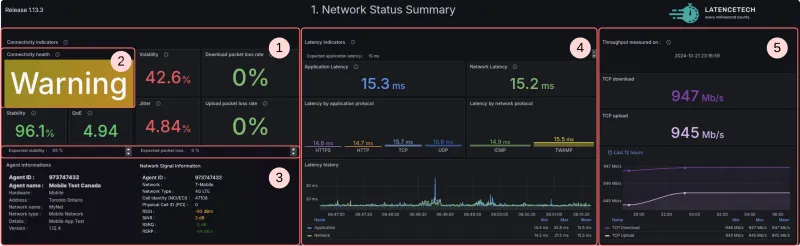
Photo: server performance latency web development dashboard metrics, via docs.latence.ca
There's a seductive pitch that's been making the rounds in developer circles for a few years now. It goes something like this: "Why serve boring static HTML when you can have dynamic rendering — fresh data, personalized content, edge-optimized delivery?" Frameworks sell this hard. Hosting platforms sell it even harder. And honestly? It sounds great on a conference slide.
But here's the thing nobody puts on that slide: dynamic rendering has a bill, and it shows up in your Core Web Vitals.
The Illusion of the Modern Stack
JAMstack was supposed to be the answer. Pre-built HTML, served from a CDN, blazing fast by default. And for a while, that's exactly what it was. But somewhere along the way, "JAMstack" started meaning something fuzzier. Server-Side Rendering got folded in. Then Incremental Static Regeneration. Then edge functions that run custom logic milliseconds before your HTML reaches a browser. The architecture kept getting smarter, and the performance story kept getting... murkier.
Let's be direct: SSR, ISR, and edge compute are legitimate tools. They solve real problems. But they also introduce latency, cold start penalties, and runtime overhead that pure static HTML simply doesn't have. When you reach for these tools reflexively — because your framework defaults to them, or because a tutorial told you to — you may be paying a performance tax you didn't knowingly agree to.
What Actually Happens During Server-Side Rendering
With classic static HTML, the server's job is essentially done before the user ever shows up. The file exists. The CDN has it cached. The browser gets bytes almost immediately.
With SSR, the request hits your server (or serverless function), which then wakes up, connects to a database or API, fetches data, runs your component tree through a rendering engine, assembles HTML, and then sends it. Every one of those steps takes time. On a warm server with a nearby database, you might be looking at 80–200ms of server response time before a single byte reaches the user. On a cold serverless function — the kind that spins down between requests — that number can jump to 500ms or more.
For context, Google's own guidance suggests your server response time (Time to First Byte) should be under 200ms. A cold SSR function can blow past that before the network even enters the picture.
ISR Sounds Like a Best-of-Both-Worlds Fix (It Isn't, Always)
Incremental Static Regeneration was positioned as the elegant middle ground — pre-render pages statically, but revalidate them in the background when content changes. Next.js popularized this pattern, and it genuinely works well for a lot of use cases.
But ISR has a quirk that's easy to overlook: the first request after a revalidation window expires triggers a full server-side render. That user — the unlucky one who hits your page right after the cache stales — gets the slow experience. Everyone else gets the cached version. This is called a "stale-while-revalidate" model, and while it's clever, it means your worst-case performance is still tied to your server's render time.
If your revalidation interval is short (say, every 60 seconds), and you have moderate traffic, a meaningful percentage of your users are consistently hitting that cold path. Your average TTFB looks fine in aggregate. Your p95 latency tells a different story.
Edge Functions: Faster Compute, But Not Free
Edge functions are the newest entry in this conversation. The promise is real: run compute closer to the user, reduce round-trip time to origin servers, deliver personalized content without the latency of a centralized server farm. Cloudflare Workers, Vercel Edge Middleware, Netlify Edge Functions — they're all playing in this space.
Here's the catch. Edge functions are fast at compute, but they still need data. And your database almost certainly isn't at the edge. When your edge function in Atlanta needs to query a Postgres instance in us-east-1, you've reintroduced the latency you were trying to eliminate. Distributed databases that colocate with edge nodes exist, but they're expensive and operationally complex. Most teams aren't running them.
So you end up with a setup that's architecturally sophisticated and feels modern, but performs similarly to a well-configured regional server — with added complexity and a steeper monthly bill.
The Bundle Bloat Nobody Talks About
Performance isn't just about TTFB. JavaScript bundle size matters enormously for real-world user experience, especially on mobile networks. Here's where dynamic rendering frameworks tend to accumulate quiet debt.
Hydration — the process where client-side JavaScript takes over an SSR'd HTML page — requires shipping the full component tree to the browser so it can "reattach" event listeners and state. For content-heavy pages, this can mean hundreds of kilobytes of JavaScript that a truly static page would never need. The user sees content quickly (good), but the page isn't interactive until hydration completes (not so good). This gap is what Lighthouse measures as Total Blocking Time, and it's a known weakness of SSR-heavy frameworks.
Partial hydration and React Server Components are actively working to solve this problem, but adoption is uneven and the mental model is genuinely complex to get right.
So When Does Static HTML Actually Win?
For content that doesn't change per-user and doesn't need to be fresher than your build cadence — marketing pages, documentation, blogs, portfolios, product landing pages — plain static HTML is still the performance champion. There's no server to wake up, no database to query, no JavaScript hydration overhead. The CDN serves a file. The browser renders it. Done.
The performance delta isn't theoretical. Tools like WebPageTest and real-user monitoring consistently show that static pages outperform SSR equivalents on TTFB and LCP, often by significant margins. When you're chasing Core Web Vitals scores for SEO or trying to hit that "Good" threshold in PageSpeed Insights, shaving 300ms off your server response time by eliminating it entirely is a move that no amount of edge optimization can fully replicate.
The Right Tool, Not the Default Tool
None of this is an argument against SSR, ISR, or edge functions. It's an argument against reaching for them by default because your framework makes them easy or because the architecture looks impressive in a diagram.
Before you add a layer of dynamic rendering to a page, ask yourself: what specifically requires this? Is the content user-specific? Does it change more frequently than you can reasonably rebuild? Is there a personalization requirement that genuinely can't be handled client-side or with a static shell?
If the answer is yes to any of those, dynamic rendering earns its place. But if you're SSR-ing a pricing page because your framework defaults to it, you're paying a performance tax on content that could have been a static file built at deploy time.
The pixel-perfect irony of modern web development is that our most sophisticated tools can produce slower experiences than the humble static HTML file they were designed to replace. Sometimes the smartest move is the boring one.